AI won’t replace developers. But developers who don’t adopt AI will be replaced. It sounds dramatic, but it’s already happening.
AI won’t replace developers.
But developers who don’t adopt AI will be replaced.
It sounds dramatic, but it’s already happening.
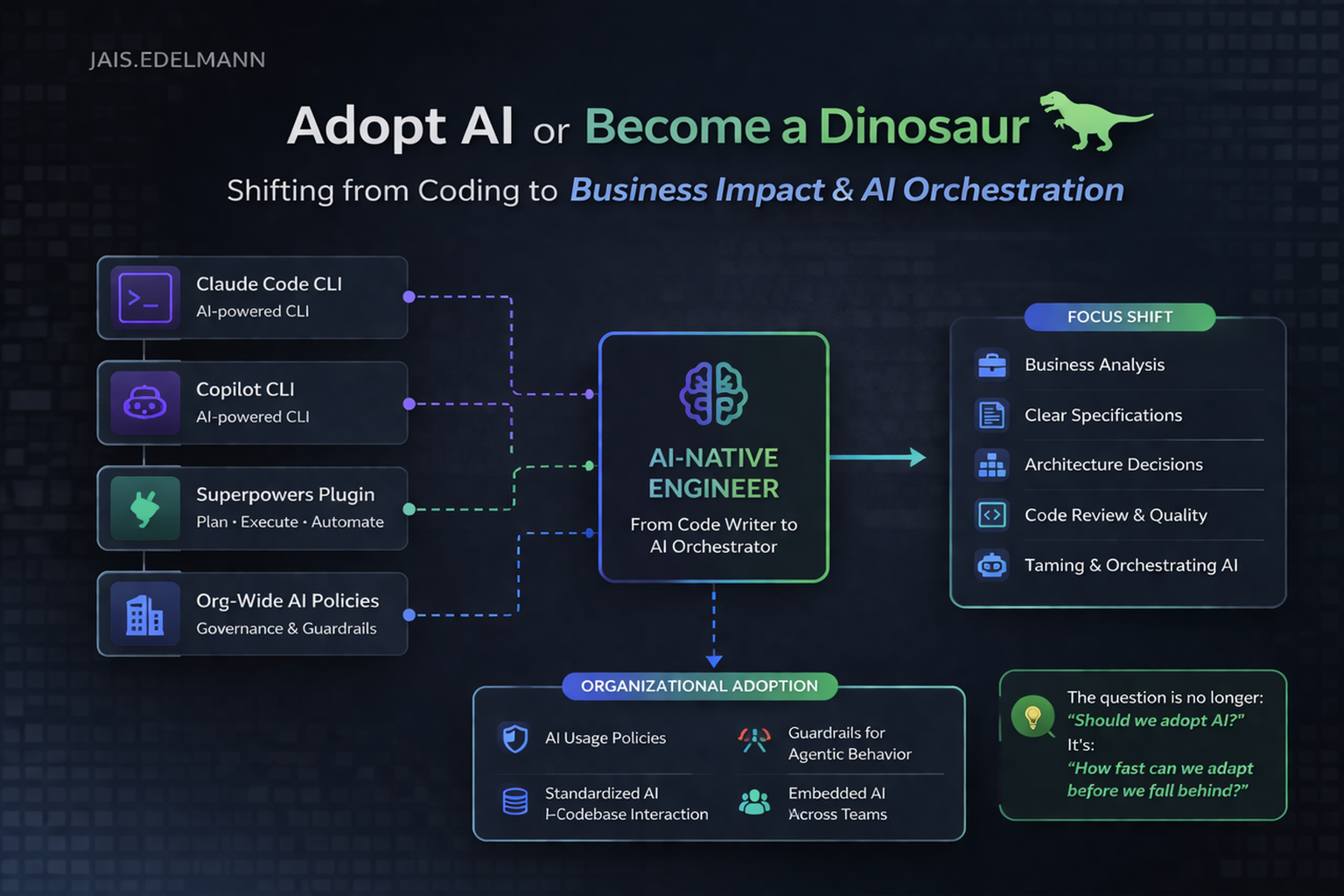
Tools like Claude Code CLI and GitHub Copilot CLI are fundamentally changing how we build software. When combined with plugins like Superpowers (brainstorm → plan → execute), the workflow shifts completely.
From Coding to AI-Orchestrated Development
We’re no longer just writing code. We’re designing AI-driven workflows.
A modern development process looks like this:
- Brainstorm with AI before touching code
- Use architecture agents to shape the solution
- Generate structured implementation plans
- Leverage agents for refactoring, simplification, and code review
- Continuously validate and guide AI-generated outputs
This is not just AI helping developers. This is developers orchestrating systems of agents.
The Shift in Engineering Focus
As AI takes over more of the implementation work, our focus shifts toward higher-value activities:
- Business analysis
- Clear and structured specifications
- Architecture and system design
- Code quality and review
- Taming and guiding AI behavior
Operationalizing AI Across the Organization
Adopting AI is not about giving developers access to a chatbot. It requires a fundamental shift in how organizations build software.
- Define clear AI workflows instead of ad-hoc prompting
- Standardize agent roles (architecture, reviewer, refactor, simplifier)
- Establish guardrails for agentic behavior
- Implement AI policies across teams
- Provide developers with the tools and tokens needed to use AI at scale
Limiting access to AI tools means limiting productivity. The organizations that win will be the ones that empower their teams to fully leverage AI.
The New Role of the Engineer
The best engineers today are no longer just coders. They are:
- Problem framers
- System designers
- AI orchestrators
This isn’t about using AI occasionally. It’s about building an AI-native organization.
The Real Question
The question is no longer: Should we adopt AI? It’s:How fast can we adapt before we fall behind?